

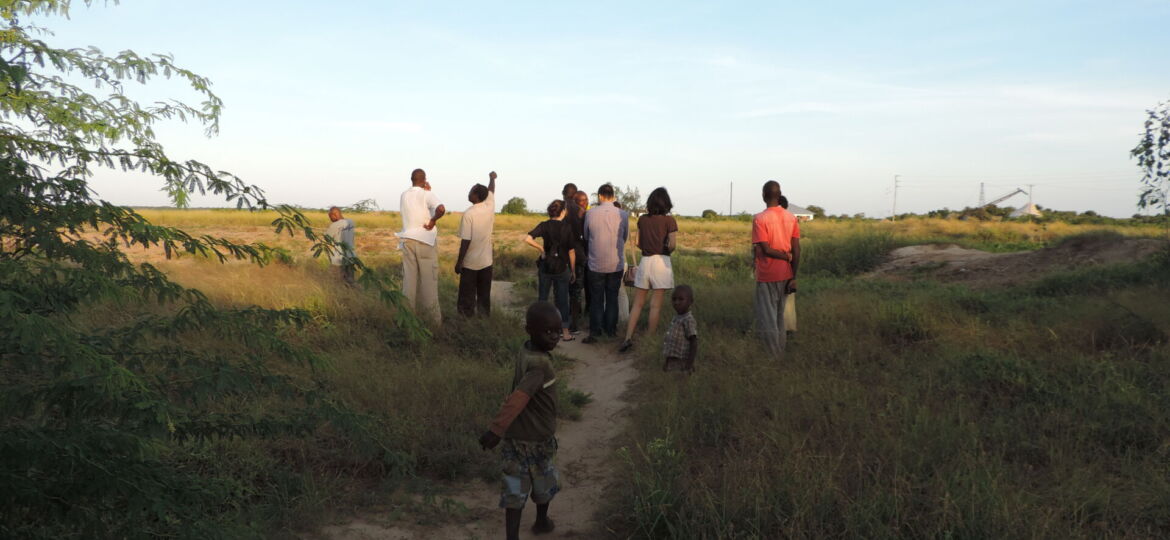
When we talk about protecting human rights defenders, the conversation too often stops at physical safety: a safe house, a relocation, an emergency fund. ProtectDefenders.eu has long championed a more holistic understanding of protection, one that recognises that defenders’ ability to continue their work also depends on wellbeing, community, and sustainable support systems. Safety alone has never been enough to keep a defender doing their work. Ask the Ogiek human rights defenders of Kenya’s Mau Forest, and they’ll tell you why.
A community carrying more than land loss
For decades, the Ogiek, an Indigenous community whose identity is inseparable from the Mau Forest, have endured repeated forced evictions from their ancestral land, even after the African Court on Human and Peoples’ Rights ruled in their favour. Each eviction, often carried out in the name of conservation, has meant more than a lost home. It has meant lost farmland, lost livelihoods, and a slow erosion of the cultural identity that land represents. The consequences extend beyond the loss of land itself, affecting community wellbeing, cultural continuity, and the conditions in which defenders carry out their work. These impacts can include trauma, family strain, harmful coping mechanisms, and other long-term psychosocial effects.
For the human rights defenders working alongside this community, many of whom are members of the Ogiek community themselves, protecting collective rights also means carrying collective responsibilities, histories, and experiences. Their advocacy is deeply rooted in their community, making psychosocial wellbeing an essential component of their capacity to continue defending rights over time.
This is precisely why ProtectDefenders.eu promotes a holistic approach to protection: one that goes beyond responding to immediate threats and strengthens the conditions that enable defenders to sustain their work.
Strengthening Holistic Protection Through Community Care
As part of its holistic protection approach, ProtectDefenders.eu supported PBI Kenya and the Ogiek People’s Development Program (OPDP) as co-implementers in Kenya to develop and deliver a psychosocial first aid programme rooted in Ogiek culture and community practices.
OPDP’s role was particularly important in ensuring that the programme was grounded in the lived realities, knowledge, and existing support structures of the Ogiek community. Working together with PBI Kenya and ProtectDefenders.eu, OPDP helped ensure that the approach was not an externally imposed model, but one that could be meaningfully owned and sustained by the community itself.
In March and April 2024, thirteen Ogiek human rights defenders from Narok, Kericho, Mau, Nakuru, and Nandi counties took part in a five-day Training of Trainers. The programme combined modern psychosocial tools, including Psychological First Aid, trauma-informed care, and burnout prevention, with practices the Ogiek have long relied on: storytelling, nature-based reflection, and clan-based support structures.
Concepts were translated not only linguistically but culturally, adapted through Ogiek metaphors and ways of understanding that created space for defenders to talk openly about vulnerability without making the experience feel foreign or clinical. Rather than introducing an external model of care, the programme built on existing community practices and strengthened capacities that were already present within the Ogiek community.
The outcome was not only new skills, but stronger collective protection. The programme helped establish a peer support network in which defenders are better equipped to recognise signs of trauma and distress, provide emotional and practical support to one another, facilitate referrals when needed, and stand in solidarity during moments of crisis.
This means that support does not have to wait for an external response. Defenders can draw first and foremost on the knowledge, relationships, and solidarity that already exist within their own community, while connecting to additional support when needed.
Why this matters beyond Kenya
This initiative reflects a broader shift in how ProtectDefenders.eu approaches protection. Psychosocial wellbeing is not an additional service or a standalone workstream; it is an integral dimension of effective protection that informs how the EU HRD mechanism supports defenders across different programmes and contexts.
It is also a practical demonstration of a principle ProtectDefenders.eu placed at the centre of discussion at our last EUTRP meeting: **psychosocial wellbeing is a transversal priority, not a standalone workstream.** It has to run through every part of how we support defenders — not sit in a separate box labelled “wellness.”
The Ogiek case also embodies something ProtectDefenders.eu is actively promoting across its work: a shift in how we tell stories about protection. Too often, narratives focus primarily on risk and vulnerability, overlooking defenders’ leadership, knowledge, and capacity to shape their own protection strategies.
The Ogiek experience tells a different story. These are defenders building their own systems of care, adapting global frameworks into approaches that reflect their own culture and realities, and strengthening resilience and solidarity within their community. With OPDP’s community-rooted role and the collaboration of PBI Kenya, community members were able to design, adapt, and lead their own peer-support approach, demonstrating that sustainable protection can grow from locally owned solutions rather than externally imposed ones.
It also reflects a lesson we do not say often enough: different defenders carry different psychosocial burdens, and psychosocial support is most effective when it reflects the diversity of defenders’ experiences. Women and young human rights defenders within the Ogiek community may face distinct challenges, including gendered experiences of trauma and generational differences in how struggle and resilience are understood. Holistic protection has to adapt to the people and communities it serves.
What comes next
This is what we mean when we talk about protection without an expiry date. A relocation can end a threat. A safety protocol can reduce a risk. But care, community, and psychosocial support can help a defender continue doing their work for years, not just for the duration of an emergency grant.
Protection must invest not only in reducing risks, but also in strengthening the relationships, knowledge, wellbeing, and collective capacities that enable defenders to lead change over the long term.
This initiative, implemented in Kenya with PBI Kenya and the Ogiek People’s Development Program (OPDP), forms part of ProtectDefenders.eu’s commitment to advancing holistic protection for human rights defenders by supporting locally led approaches that strengthen wellbeing, collective care, and long-term resilience.
If we want human rights defenders to remain resilient in contexts marked by ongoing injustice, displacement, and threat, we have to keep investing in what keeps them whole, not just what keeps them safe.
