

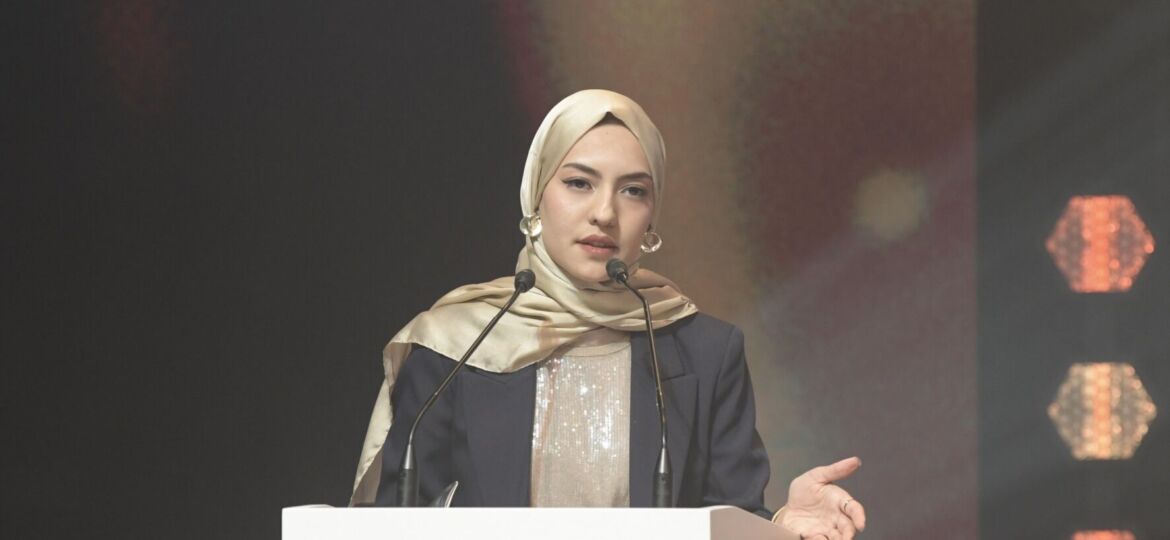
Some of the most consequential human rights work happens quietly, and it is carried out by people young enough that their names rarely make it into the stories we tell about defenders. This time, for International Youth Day, we want to tell one of these stories, and it’s worth telling not because its protagonist is a victim, but because she isn’t one.
She began advocating for the rights of women and girls in Afghanistan while still young herself, facilitating youth working groups at UNFPA, training on women’s rights and child protection at UNICEF, taking part in EU-linked women’s empowerment projects. This was the kind of work an entire ecosystem of NGOs and UN agencies supported before 2021.
Then the context changed overnight. With the Taliban’s return to power, defending women’s rights became not just difficult but illegal, actions were punishable by arbitrary imprisonment or accusations of “moral corruption,” with torture a real risk. She adapted rather than stopped: continuing her work as general coordinator for a partner organisation in Afghanistan, while formally working as an educator for girls under twelve, the only activity the law still allowed her to do openly.She hadn’t yet been individually targeted, and her organisation was still operating. But in a country where the risk to women defenders is systemic rather than incidental, waiting for a direct threat to materialise isn’t a safety strategy. Temporary relocation, in her case, was precautionary, a way of getting ahead of a danger everyone could see coming.
Her case matters to how ProtectDefenders.eu thinks about protection, because she sits at the intersection of two groups whose risks compound rather than simply add up: she is a young defender, and a woman defending women’s rights in one of the most restrictive environments in the world for that work. Afghanistan consistently generates some of the highest volumes of support requests that are received.
During her relocation to Spain, facilitated by the Catalan Commission for Refugee Aid (CCAR) under ProtectDefenders.eu’s Stream 2 temporary relocation programme, she received digital security training, language support, and psychosocial support and rest. She also kept working: partnering with Ponts per la Pau, the only Spain-based organisation operating in Afghanistan and led by an Afghan woman, she continued advocating for women human rights defenders at local, national, and EU level.
She described the relocation as difficult, leaving is never easy, but also as transformative: a period in which she rediscovered her own resilience, rather than one in which she was simply kept safe until a threat passed.
It would be easy to tell this story as one of rescue: a young woman fleeing danger, given shelter. That framing isn’t wrong, exactly, but it’s incomplete, and it flattens exactly the part of her story that matters most. She didn’t stop working when she left Afghanistan. She used the safety, rest, and psychosocial support the relocation gave her to keep building, like for example a partnership with a Spanish organisation, an advocacy platform reaching EU decision-makers, a renewed sense of purpose in work she had already been doing for years before anyone called her a “defender.”
She has not been able to return to Afghanistan; the security guarantees simply aren’t there. But her activism didn’t end at the border, it moved, adapted, and grew louder. That is the story worth telling about young defenders: not that they need saving, but that when they’re given the conditions to recover, safety alongside psychosocial care, not instead of it, they keep leading.
This case is also a demonstration of infrastructure working as intended.Young women defenders like her are too often invisible twice over: once because their age means their work is assumed to be preliminary rather than real, and again because the countries they work in make it dangerous to be visible at all. Telling their stories, with care, and without turning them into case studies of suffering, is part of how we push back against both.
This story reflects a temporary relocation supported by ProtectDefenders.eu, in partnership with the Catalan Commission for Refugee Aid (CCAR) and Ponts per la Pau.
