

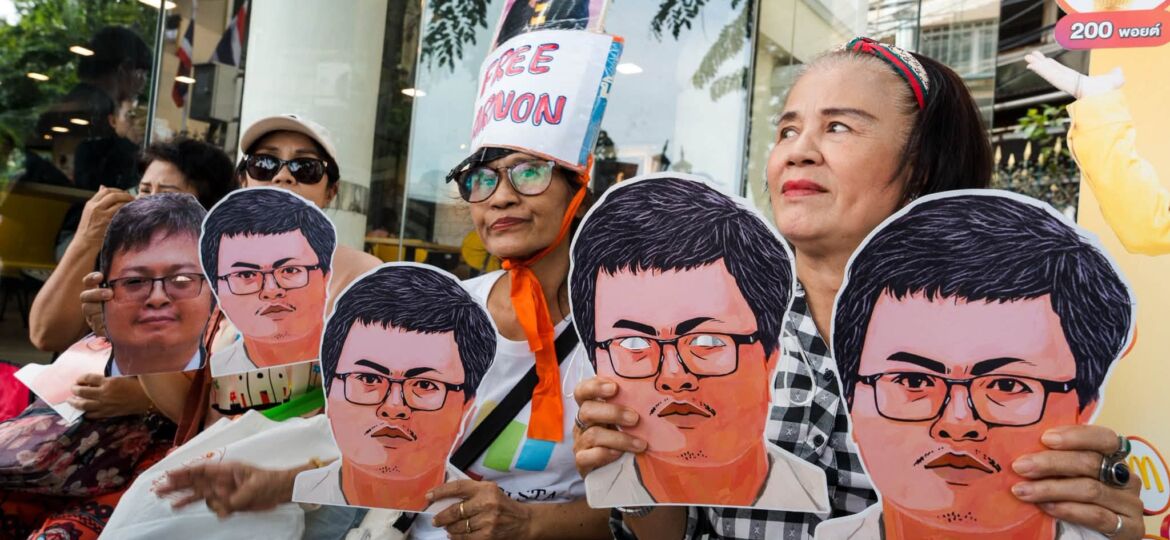
Democracy Day was just a week ago, and for this occasion we would like to reflect a bit on how democracy is not only about elections, institutions or laws. It also depends and relies on the people who speak, organise, challenge abuses and defend the rights of others.
Across the world, human rights defenders (HRDs) are often among the first to test whether democratic principles are being upheld in practice. When peaceful criticism is criminalised, when civic space narrows, or when those who speak out are imprisoned, democracy is weakened not only for the individuals concerned, but for society as a whole. And Thailand offers a powerful illustration. In partnership with Forum-Asia and Thai Lawyers for Human Rights, we are highlighting the experiences of Thai democracy advocates whose cases show why protecting those who defend human rights is an essential part of building resilient democracies.
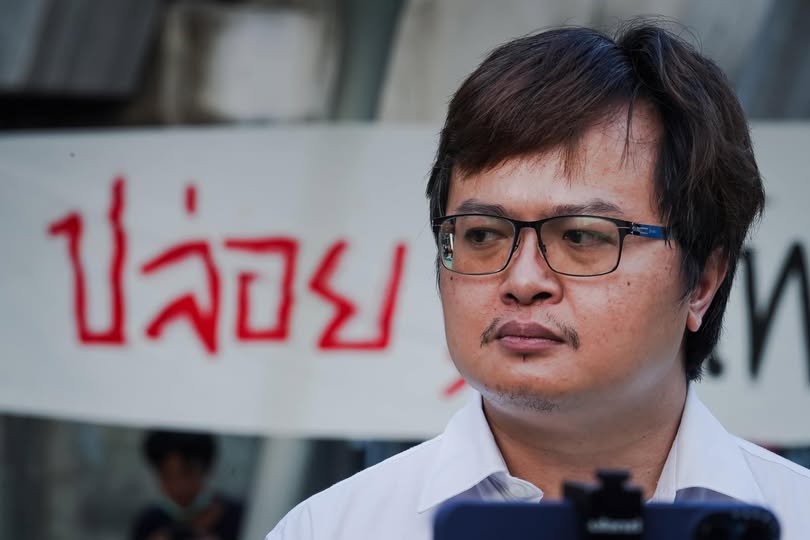 One example is Arnon Nampa, a human rights lawyer and recipient of the 2025 Front Line Defenders Award for Human Rights Defenders at Risk, has been detained at Bangkok Remand Prison since 26 September 2023. In July 2026, an appeals court upheld his conviction and two-year sentence in one of his 14 separate lèse-majesté cases. Taken together, his convictions now amount to a cumulative sentence of 31 years, 9 months and 20 days. The cases stem from peaceful speeches and social media posts made during Thailand’s 2020–2021 pro-democracy protests, in which Nampa called for reform of the monarchy and criticised the transfer of public property into royal ownership. He has consistently maintained that his words constituted legitimate, constitutionally protected criticism. Every one of his bail applications has been denied. He has now spent more than 1,0
00 days in detention. His case illustrates a fundamental question for any democracy: what happens when peaceful criticism of powerful institutions becomes a criminal offence?
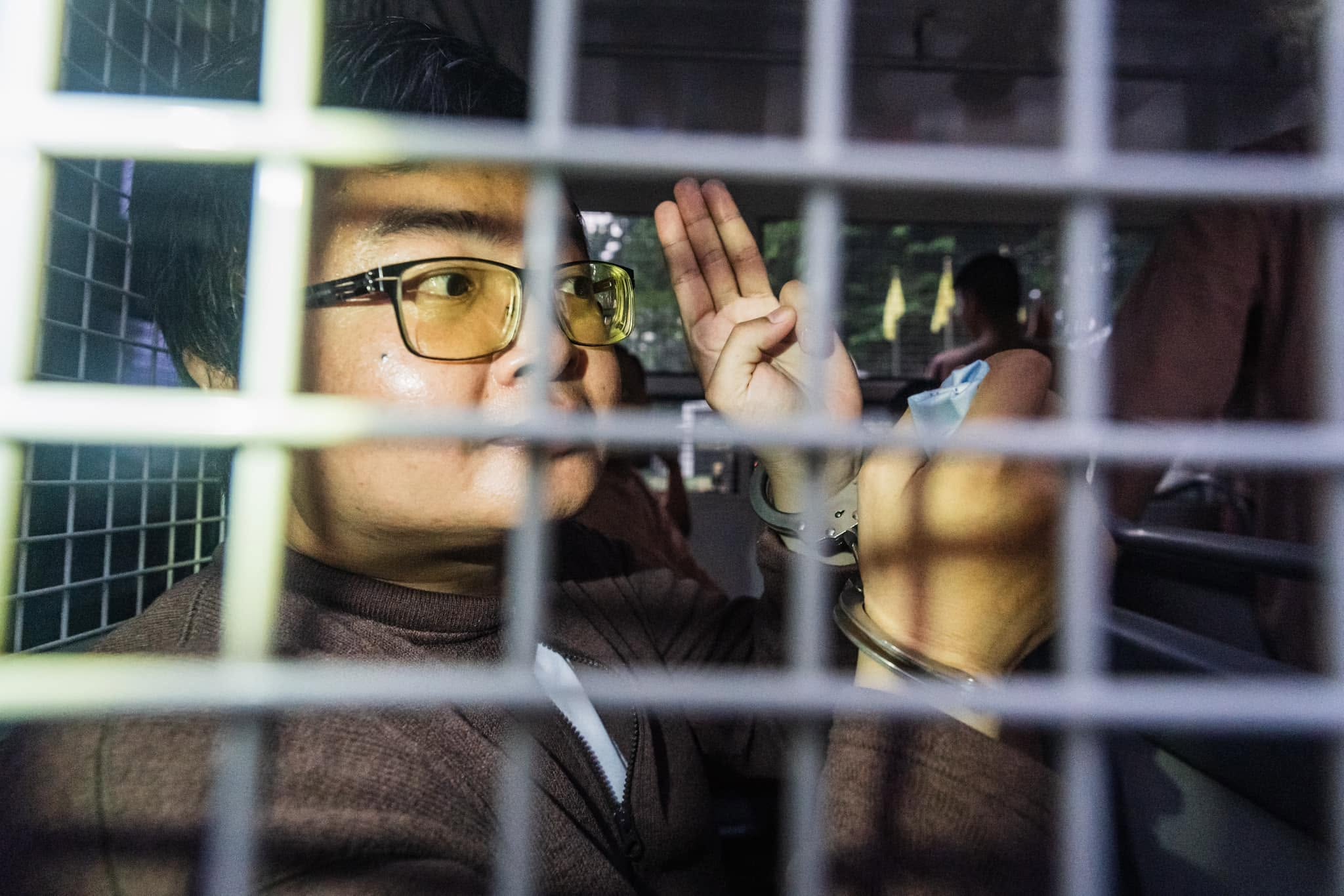 But the consequences of criminalising peaceful expression extend beyond those directly prosecuted. «Boom» Jirawat, a 33-year-old online clothes seller, was sentenced to six years in prison, without suspension, for sharing three Facebook posts in 2021. He had no history of political organising and shared the posts without comment. His case has moved through years of appeals, brief periods of bail secured through crowdfunded guarantees and an electronic monitoring device, and ultimately a Supreme Court decision denying him bail pending appeal, sending him back into custody. Behind the legal proceedings is a family in crisis. His wife, Phrae, is living with complex health conditions and their eight-year-old daughter has not seen her father in person in more than two years. His story reminds us that restrictions on civic space do not affect only the person who is prosecuted. They can reshape families, communities and the ability of people to participate in public life.
In August 2026, Thailand’s Act on Promoting a Peaceful Society came into force. The amnesty law covers political assembly and expression offences committed between 2005 and mid-2025 and is presented as a measure aimed at reconciliation. Yet it excludes Section 112, Thailand’s lèse-majesté provision. Monarchy reform has been at the centre of Thailand’s political conflict since at least the 2020–2021 youth-led protest movement, the same movement that produced cases such as those of Nampa and Jirawat. Of the at least 55 political prisoners currently held in Thailand, 31 are detained specifically under Section 112. As a result, many people prosecuted in connection with the pro-democracy movement remain outside the scope of the amnesty. In this case reconciliation does not reach those whose peaceful participation in public life challenged the boundaries of political power.
 The experience of Thailand points to a broader lesson. Human rights defenders are not simply people who need protection because they are at risk. They are also actors who contribute directly to democratic resilience. Lawyers defending protesters, journalists investigating abuses, activists organising communities, women defending rights, environmental defenders challenging harmful projects, and civil society organisations monitoring institutions all perform a function that healthy democracies depend on: they make it possible for people to participate, question power and demand accountability. When those voices are threatened or silenced, society loses part of its ability to identify problems, challenge abuses and correct course. This is why protecting human rights defenders should not be understood only as a human rights obligation. It is also a strategic investment in democratic resilience.
At a time when civic space is under pressure in different parts of the world the protection of human rights defenders is increasingly connected to broader questions of democratic resilience, security, EU enlargement and Europe’s international credibility. HRDs must be recognised as strategic partners in building and protecting democratic societies.
The stories of Arnon Nampa and Boom Jirawat are difficult reminders of what happens when the space for peaceful dissent contracts. But they are also reminders of why human rights defenders matter. Democracy is not sustained by institutions alone. It is sustained by people who use their rights to participate, question, organise and hold power to account, and by societies willing to protect them when doing so becomes dangerous.
Photo credits to eggcatcheese
