

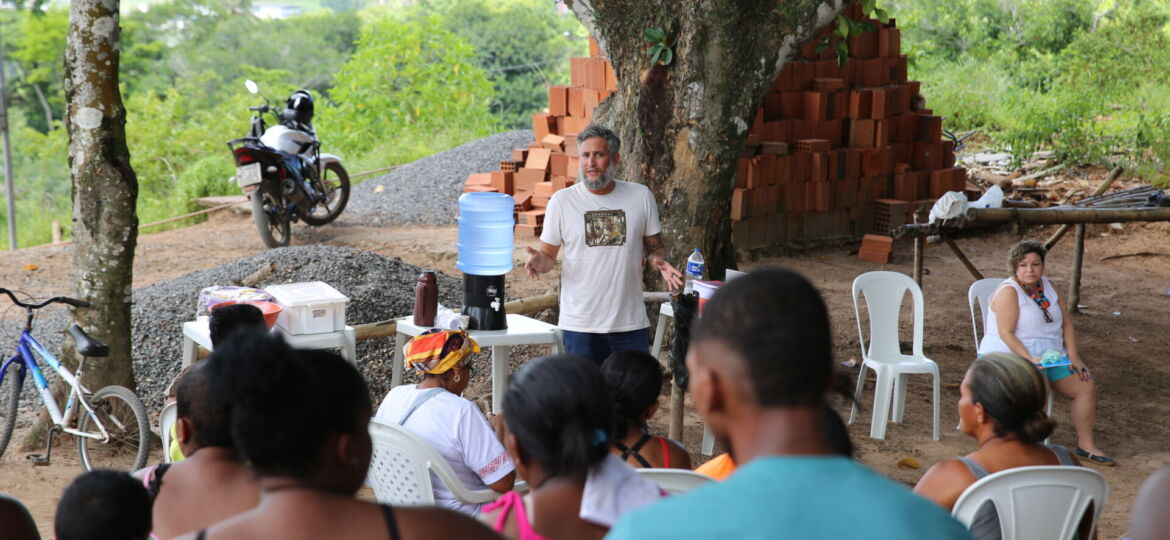
Latin America remains one of the most dangerous regions in the world for human rights defenders. Daily reality of human right defenders is shaped by violence, criminalisation, judicial harassment, and systemic efforts to silence their work. While part of our work involves engaging with defenders through alerts and protection requests, we also have the opportunity to engage directly with defenders on the ground, allowing us to better understand the risks they face and the responses that are needed and being developed. It is in this context that we are pleased to share this interview with Justiça Global, a key actor in the protection of human rights defenders in Brazil and across the region. The conversation focuses in particular on the Centro de Proteção Integral (CEPI)—a comprehensive protection and shelter initiative co-created with the support of ProtectDefenders.eu. Together We explored the challenges and opportunities of regional relocation systems in South America, and the value of care-centred approaches to protection.
Latin America remains one of the most dangerous regions in the world for human rights defenders. From your perspective and Justiça Global’s, what are the main factors driving this persistent violence, especially in countries such as Brazil, Mexico, and Colombia?
Violence against human rights defenders and communicators in Latin America — particularly in Brazil, Mexico, and Colombia — stems from deeply interconnected structural factors. First and foremost, chronic impunity and the fragility of justice systems stand out, as threats, attacks, and killings are rarely investigated or punished, creating an environment of permissiveness toward violence. This is compounded by a lack of political will and insufficient resources for existing protection mechanisms, which operate precariously, with weak institutional coordination and without robust legal frameworks. Moreover, these mechanisms often adopt a reactive logic, focused on individual and emergency measures, without addressing the structural causes of risk or incorporating a preventive, human-rights-based approach.
Another central issue is the context of conflicts over economic and territorial interests, especially in rural and environmentally strategic areas, where defenders and journalists challenge local power structures linked to agribusiness, mining, or the illegal exploitation of natural resources. In all three countries, this scenario is exacerbated by the presence of armed groups and organized crime.
At the same time, the criminalization and stigmatization of these actors by authorities and political leaders undermine their public legitimacy and increase their exposure to violence. These factors intersect with structural inequalities, historical discrimination, and processes of democratic erosion, resulting in a systemic pattern of violence that is not episodic, but structural and persistent.
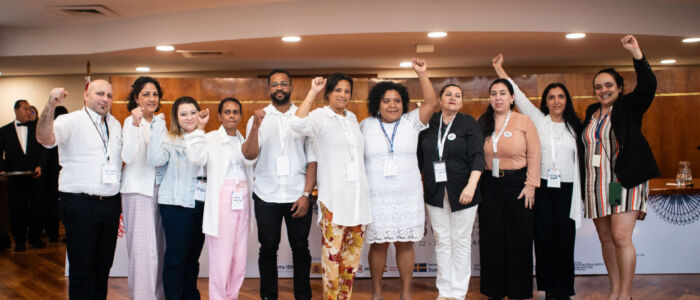
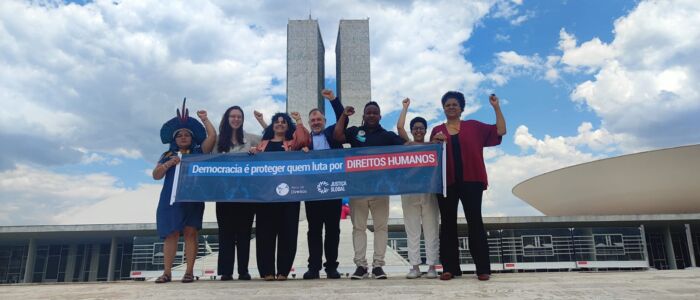
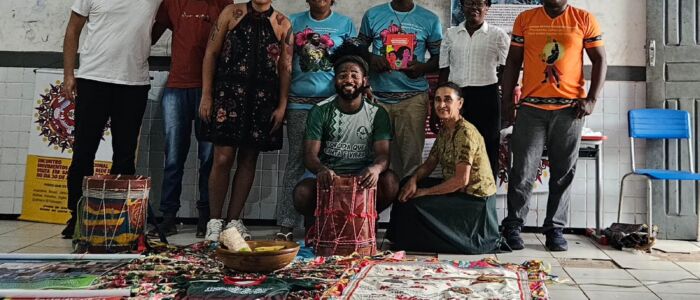
Justiça Global has played a close role in the development and monitoring of the national framework for the protection of human rights defenders in Brazil. Where do you identify the most urgent gaps?
Justiça Global has made an important contribution to public policies for the protection of human rights defenders in Brazil, from their formulation in 2003 and adoption in 2004, to more recent engagement (2024–2025) as a member of the Deliberative Council of the National Program for the Protection of Human Rights Defenders, Communicators, and Environmental Defenders (PPDDH), as well as participating in the drafting of the National Plan for the Protection of Human Rights Defenders. Although the National Human Rights Defenders Plan represents a major advance toward consolidating a national protection system, there is still a long way to go before it is effectively implemented. One of the most urgent gaps concerns the chronic lack of financial resources and institutional capacity, which directly affects the program’s ability to function. Insufficient funding limits the expansion and training of protection teams and combined with the absence of a legal framework establishing the protection policy by law, and its reliance on agreements between the State and civil society organisations, these constraints significantly undermine the effectiveness, sustainability, and reach of the protection system.
Through initiatives such as Na Linha de Frente, your organization documents violence against human rights defenders. How does documentation contribute both to protection and accountability, especially in contexts marked by impunity?
In its two most recent editions, Na Linha de Frente – Violence against Human Rights Defenders in Brazil (2023–2024) has come to include, in addition to qualitative analysis, quantitative data, which is essential for measuring the severity of violations against human rights defenders in Brazil and for positioning the country among the four most dangerous for activists. The research contributes to the protection of defenders by systematizing and giving visibility to a broad set of data on threats, attacks, criminalization, and killings. By demonstrating that violence is not episodic but structural and recurrent, the report strengthens civil society’s response capacity, informs public protection policies, and provides concrete evidence for the work of national and international bodies. The dissemination of this data also breaks the isolation of those under threat, expands networks of solidarity and public pressure, and contributes to the construction of preventive strategies based on identified risk patterns.
The report is also a tool for accountability in context marked by Impunity it highlights the low effectiveness of investigations and the limited response of the justice system to crimes committed against defenders. By documenting the gap between the occurrence of violence and the adoption of concrete measures by the State, the publication exposes institutional failures and reinforces the need for legal, administrative, and political reforms. In this sense, the report serves as a technical basis for advocacy actions, strategic litigation, and engagement with international human rights mechanisms, contributing to pressure on the Brazilian State to fulfill its obligations to investigate, punish those responsible, and guarantee non-repetition of violations.
CEPI represents a pioneering model of comprehensive protection, combining shelter, psychosocial support, and capacity building. To what extent does this approach differ from traditional emergency protection mechanisms?
CEPI’s approach differs from traditional mechanisms insofar as it prioritizes the needs expressed by relocated individuals themselves. Although our approach is grounded in the pillars of physical, digital, and care-based protection, as well as the strengthening of political action, the activities developed — Comprehensive Protection Workshops (physical and organizational, digital, care and self-care; risk analysis and the construction of protection strategies; legal support; psychological support; collective care and rest activities; access to short courses (languages, arts); body-based activities; political strengthening of those hosted; and return-to-territory planning) — are designed in dialogue with cultural, racial, religious, gender, and sexual diversity. They are also attentive to possible traumatic experiences and respect an implementation pace that avoids overload.
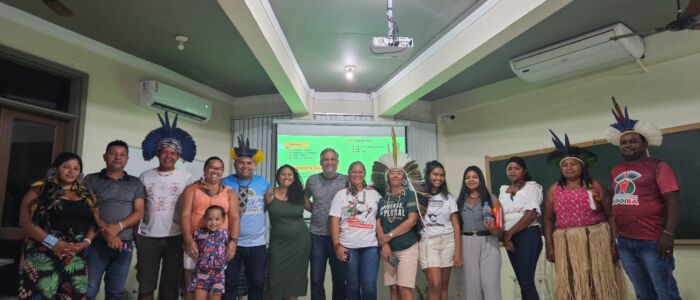
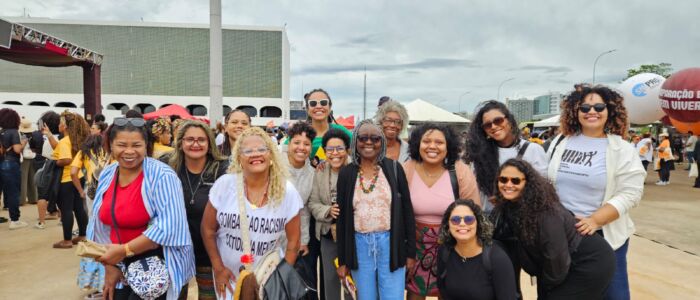
Most of the defenders hosted by CEPI are women. Why is that? And how does CEPI integrate a gender- and intersectionality-based approach into its protection strategies?
Women human rights defenders often face not only threats related to the causes they defend, but also gender-specific forms of violence, such as moral criminalization, attacks on their private lives, sexual violence, disproportionate responsibility for family care, and emotional overload. These factors significantly intensify risk and physical and psychological exhaustion.
At the same time, there are very few temporary relocation and protection programs in the region that incorporate a specific gender perspective, which frequently limits women defenders’ access to protection measures and safe relocation opportunities. In response to this gap, and given the high number of applicants who were women with histories of gender-based violence, CEPI opted for calls exclusively for women.
This decision was also an important step toward strengthening institutional protocols that are sensitive to gender and trauma. By explicitly recognizing the differentiated impact of violence on women and other historically marginalized identities, CEPI creates a safe space that legitimizes care as a political dimension of protection, challenging approaches that normalize exhaustion, illness, and sacrifice among women defenders.
Temporary relocation can be both a moment of safety and a period of profound personal and political rupture. How does CEPI support defenders not only during relocation, but also in preparing for a safe and sustainable return to their territories?
CEPI’s methodology covers the entire process, from selection and risk analysis to post-return follow-up, ensuring a participatory, intersectional, and regional approach sensitive to dimensions of gender, race, class, and sexuality. During the relocation period, CEPI offers interdisciplinary support and a coordinated set of activities, and each stay is accompanied by an individualized monitoring and follow-up plan, this ensures coherence with the guidelines of Comprehensive Protection from an intersectional perspective. Throughout the relocation period and in the preparation for return, we maintain contact with local organizations to strengthen the articulation of defenders. When necessary, we also coordinate with emergency funds, since in many cases defenders must leave jobs or housing to enter relocation spaces and require financial assistance to ensure a safe return. Post-return follow-up is another key element of this methodology. Protection does not end with the conclusion of relocation: CEPI maintains monitoring and support, seeking to ensure coherence between the experience during shelter and the challenges faced upon return. This approach prevents relocation from becoming an isolated experience disconnected from territorial realities, strengthening the continuity of struggles and defenders’ self-protection capacity.
Looking to the future, what lessons from the work of Justiça Global and CEPI could be replicated or adapted in other high-risk contexts in Latin America and beyond to strengthen long-term protection for human rights defenders?
A first central lesson is the adoption of a Comprehensive Protection approach, which understands protection beyond physical measures and incorporates psychosocial, legal, cultural, and symbolic dimensions. By using this approach we recognise that the sustainability of defenders’ political action also depends on emotional care, rest, subjective strengthening, and the rebuilding of bonds and meaning.
Another fundamental lesson is the centrality of individualized and participatory risk analysis, combined with the construction of protection strategies and return-to-territory plans. By articulating temporary shelter, continuous support, and preparation for return, this approach strengthens the autonomy of those hosted and avoids purely emergency or assistentialist solutions, pointing instead toward models that envision the construction of a culture of protection.
The program also highlights the importance of an intersectional perspective sensitive to inequalities of gender, race, class, sexuality, and territorial belonging. The specific attention given to women, Black people, Indigenous peoples, LGBTQIA+ individuals, quilombola communities, and community leaders demonstrates that risk contexts are shaped by multiple forms of oppression, requiring differentiated and contextualized responses — an essential lesson for other countries in the region.
In addition, CEPI demonstrates the value of networked work and international articulation, integrating regional and global platforms and partnerships for temporary relocation. Recently, in partnership with Fundação Acesso and with the support of Protect Defenders, we carried out an exchange of experiences on temporary relocation in Latin America. This type of articulation expands the capacity to respond to complex cases, promotes knowledge exchange, and contributes to the construction of regional protection standards, which is particularly relevant in scenarios of transnational persecution.
Finally, continuous investment in team training and institutional strengthening emerges as a strategic lesson to ensure the sustainability of protection programs. Specialized consultancies, constant evaluation of practices, and the collective production of knowledge reinforce the idea that protecting human rights defenders requires reflective, adaptable processes that are politically committed to the defense of life and democracy.
Evaluations conducted with human rights defenders hosted by CEPI demonstrate the program’s positive impact on emotional recovery, the adoption of protection strategies, and the continuity of political action with greater safety, autonomy, and well-being. The space is recognized for its welcoming, safe, and transformative character.
More than a shelter, CEPI is a space of resistance and reconstruction, an ethical and political commitment to the defense of life and to strengthening struggles for human rights in Latin America.
