

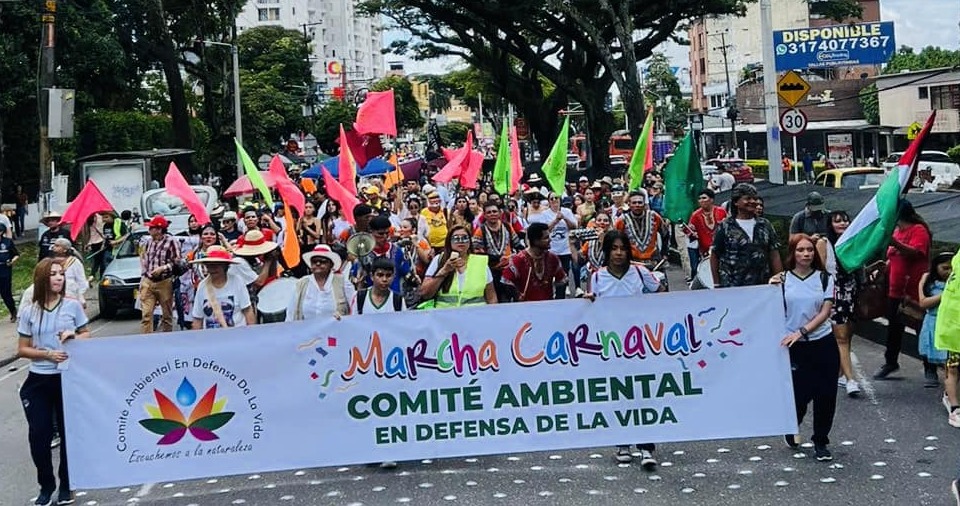
Every year, the International Day of the World’s Indigenous Peoples is a moment to recognise the defenders leading the defence for their territories, ecosystems, and ways of life. It’s also a reminder that recognition alone doesn’t keep anyone safe. This year, we want to share both sides of that reality: a story of what sustained, collective protection can achieve, and a reminder, from just weeks ago, of how fragile that safety still is.
A decade of sustained accompaniment in support of community-led protection.
In Tolima, Colombia, the Comité Ambiental en Defensa de la Vida (CADV) has spent over a decade at the frontline of territorial defence, a grassroots coalition of Indigenous, campesino, youth, feminist, and urban environmental defenders resisting extractive megaprojects and defending ecological rights. Their work has never come easily: their collective work has long been met with cycles of criminalisation, surveillance, and violent threats have followed CADV members for years.
In 2025, that pressure intensified sharply. Colombia’s National Mining Agency granted new mining titles across multiple municipalities in Tolima, directly threatening the the territories, water sources, and food systems that Indigenous and campesino communities steward,, and escalating risk for the environmental defenders standing in the way.
What happened next is a model of what protection can look like when it’s built on relationships, not just emergency response. Building on CADV’s advocacy, ESCR-Net mobilised a coalition of 42 international organisations and human rights groups to issue a coordinated global call demanding Colombian authorities halt the mining titles, thus significantly raising the visibility of Tolima’s communities and amplifying amplifying the demands and leadership of CADV and the affected communities on the international stage. In parallel, CADV helped lead a feminist, community-led research project documenting the climate-related losses their territory was already experiencing, strengthening both their evidence base and their own internal political analysis.
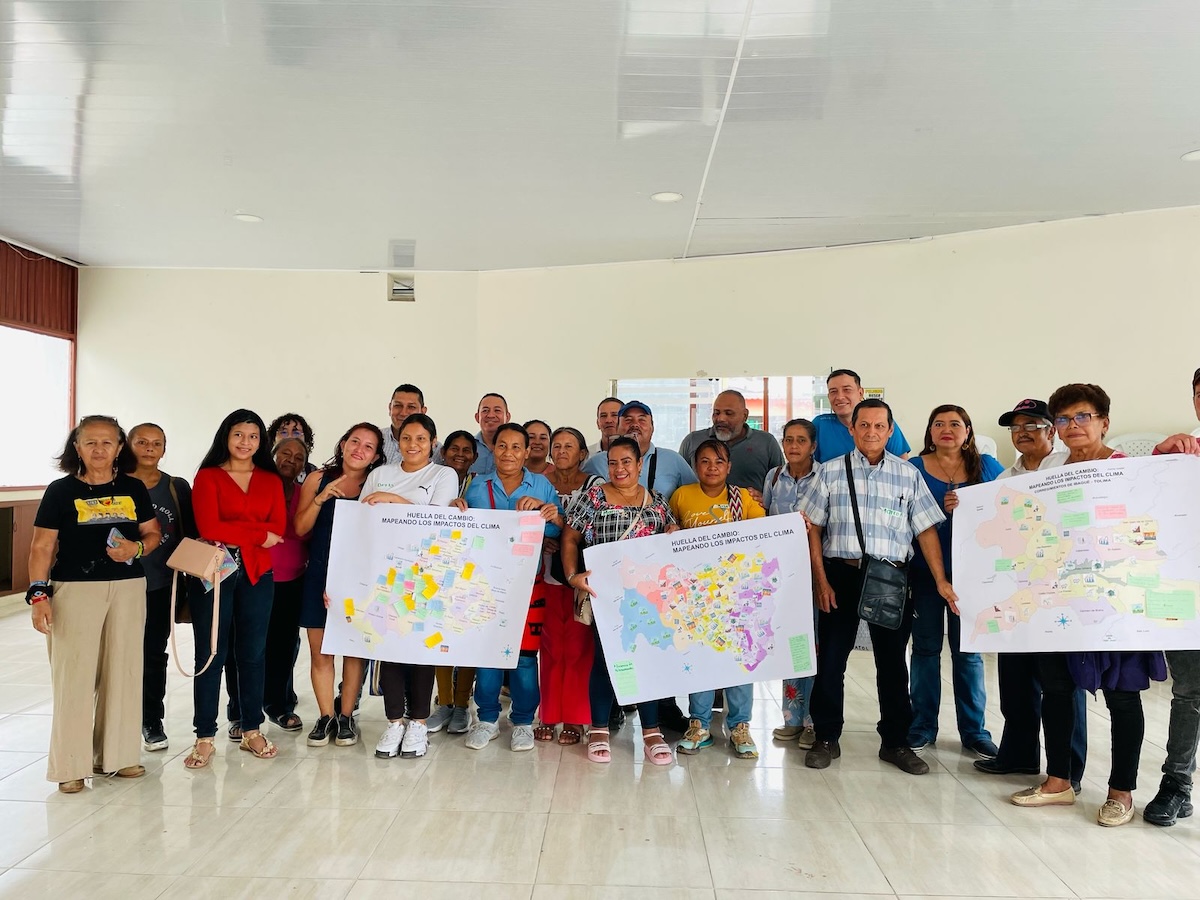 Perhaps most tellingly, protection didn’t stop at the international level. Working alongside Front Line Defenders, CADV continued strengthening its own, community-led protection mechanisms, rebuilding trust after past infiltrations and political tension, improving communication systems, and creating safer spaces for internal dialogue. And at COP30, CADV’s own Martha Devia brought her community’s priorities and experience directly into directly into global climate negotiations bringing the discussion on the frontline.
None of this was a single intervention. It was years of accompaniment converging at the right moment: international pressure, community-owned evidence, internal trust-building, and institutional advocacy, working together rather than in isolation. That, ultimately, is what holistic protection is meant to achieve, not just responding to a threat, but strengthening the conditions that allow communities to continue defending their territories on their own terms.
A stark reminder: the threats haven’t stopped.
However, just weeks ago, on 15 July 2026, that fragility was on full display more than 3,000 kilometres away, in Michoacán, Mexico. José Luis Silva Andrade, a member of the Agua Fría community and brother of environmental defender Rolando Silva Andrade, went missing after leaving home to investigate illegal logging near his community. His family has not been able to reach him since. The following day, a man reportedly linked to organised crime told his sisters that José Luis had been abducted and that they would need to “negotiate”, later escalating to threats that he would be beaten and disappeared unless the family signed over community land.
This is not an isolated incident. Rolando Silva Andrade and his family have faced a documented pattern of armed threats since February 2026, aimed at breaking the community’s resistance and forcing the Agua Fría community to relinquish the forest and water sources it has protected for generations.
The distance between Tolima and Michoacán is vast, but the throughline is the same: land and environmental defenders are targeted precisely because their communities stand between extractive interests and the territories they depend on. What separates one story from the other isn’t the level of risk, it’s whether whether timely, sustained accompaniment and protection are available , and whether it’s sustained rather than one-off.
On this Day of the World’s Indigenous Peoples, both stories deserve to be told: the one that shows what’s possible communities are accompanied through sustained solidarity, and the one that shows what’s still urgently needed where it hasn’t yet arrived.
Sources: ESCR-Net, Front Line Defenders
