

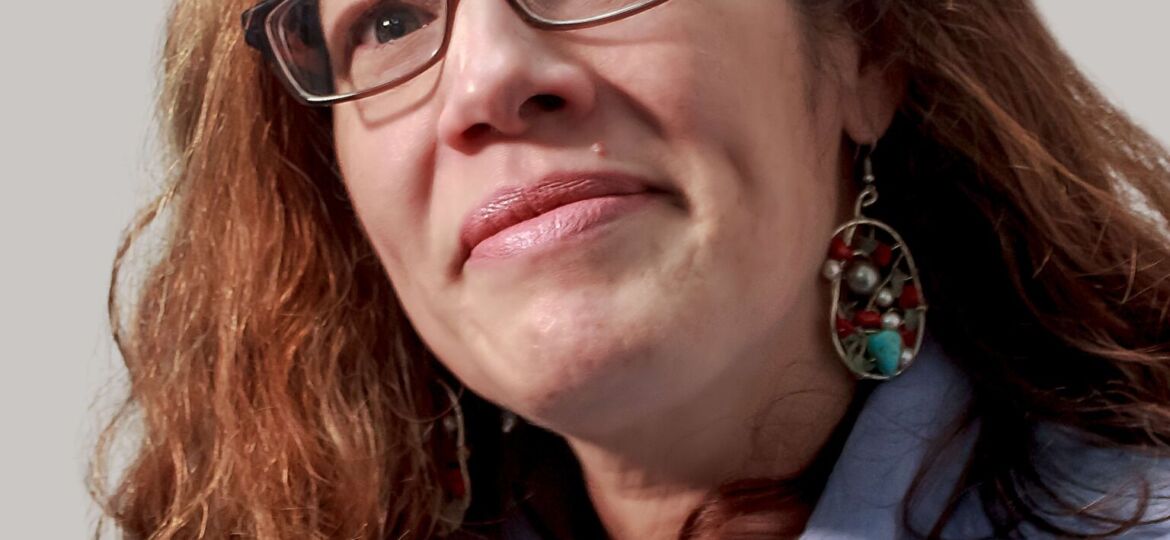
In follow-up to our previous conversation with Justica Global about the importance of protection and relocation programmes for human rights defenders at risk, we remained in contact with one of the women defenders who benefited from temporary relocation at CEPI.
Sociologist, university professor, author, and human rights defender, Lissette González has dedicated her life to researching and confronting injustice in Venezuela. What began as an academic commitment to studying social rights gradually evolved into direct human rights advocacy, shaped by the country’s deepening humanitarian crisis and by a personal tragedy that profoundly marked her life. Alongside her academic research on social rights, inequality, and institutional decline in Venezuela, she has contributed to national and international advocacy efforts, including engagement with UN Special Rapporteurs.
She experienced both the risks of defending rights inside Venezuela and a period of temporary relocation for safety, we asked her what it means to continue this work under pressure, the specific challenges faced by women defenders, and why car and community remain essential to sustaining human rights struggles.
Looking back, what motivated you to begin your work as a human rights defender? How did your academic background in sociology shape your decision to take on this path?
Looking back, I always thought that an academic career would be my life. As a professor, you always have something new you want to go on and study, and research was something I deeply enjoyed. But the economic situation in Venezuela became extremely hard. My university salary was not enough to afford even a small rent, and I had to make a choice. Many of my colleagues left the country and found jobs elsewhere, while I decided to change my professional path.
My first contact with human rights work came while I was still working at the university. I did a consultancy for human rights organization, where I designed indicators to measure efficiency of several institutions of our justice system. It was mainly about access to justice, analyzing how different institutions were functioning and developing indicators to monitor the situation every couple of years. At the same time, I was collaborating with a professor on legal rights, especially union rights and union freedom. Later, I started working with FES in Venezuela, where I worked with union leaders and planned capacity-building trainings. When I started working in Provea, this transition felt very natural because throughout my life, I had always wanted to research social justice. In 2022/23 I was in charge of the annual report, and I realized that my experience as a researcher had been extremely helpful in becoming a human rights defender. Even if I move into another field in the future, this experience will remain with me.
In Venezuela, I believe that anyone working on social justice eventually becomes a human rights defender. Once you study these issues, you begin to see the flaws in the Venezuelan system, and you cannot ignore them. I saw many injustices that could be addressed through research, books, or reports — but that required someone willing to speak out. I also think that not many human rights defenders focus specifically on social rights. While Venezuela faces very serious problems such as repression, torture, and political persecution, I believe the main crisis is related to social rights. The Venezuelan diaspora is gigantic. People have faced hunger, the collapse of the health system, and the lack of basic means to survive. Much of this suffering remains invisible. People have walked from Venezuela to Argentina because they have no food, no job, no healthcare.
As a human rights defender, I do not only write reports. We also develop strategies to make people aware of what Venezuelans are suffering. We contributed information to the UN Special Rapporteurs, including submissions related to the right to food and to the mandate on human rights defenders. I am very proud that our reports helped raise international awareness and supported advocacy efforts.
Your book ” Mi padre, el aviador” recounts a deeply personal story of injustice, memory, and reconciliation. How did writing this book affected you as both a defender and as a person?
I had always wanted to write this book, even when my father was still in prison. But it was an emotionally demanding task, and for a long time I did not feel ready. Eventually, during the pandemic, I found the space to do it. It was a calmer moment, I had more time, and I decided to begin. I was very disciplined, I wrote every morning for one hour, and then again in the evening. I was already working as a human rights defender, and my contact with colleagues helped me a lot in the writing process. That system of support was very important. The story was already intertwined with my work, and I felt a responsibility to write about it, not only as a daughter but also as someone committed to justice.
My father was a retired pilot. The situation in Venezuela had been deteriorating for years, and he was very politically motivated. Since 2002, he had supported protests and civic movements against the government. In 2014, there were many protests across the country. In that year, my father did not actively participate In them, especially in organizing them, but he was in contact with many activists. Out of nowhere, the government accused him of being one of the organizers, even though he had no role in it. He was denounced by what is called a “patriota cooperante”, someone who goes to the authorities and gives a name. Once that happens, you are accused, but in court there is often no real accuser and so there is no fair trial. My father was arrested. My mother was also detained, and there were search warrants for my sister’s house and for my mother’s travel agency. My father was imprisoned for ten months. He was held with other political prisoners, and he was afraid of being transferred to a general prison. Regular prisons in Venezuela are extremely violent places. He was terrified of being moved there. Eventually, he took his own life in detention. It was the first suicide of a political prisoner under Maduro. After his death, no political prisoner was transferred to a general prison until 2025.
Publishing the book was also difficult. It took a couple of years to find an editor willing to take it on. Before publishing, I carefully considered whether it was safe. I spoke with my family, especially my children. In reality, the government tends to care less about books than about television or the internet. I did not face direct problems because of the book, but there was no marketing support, likely because of the subject. Still, writing it was necessary. It was a way to make sense of what happened, to preserve memory, and to contribute to a broader reflection on justice and healing, both personally and collectively.
Many human rights defenders face heightened risks in Venezuela and across the region. From your perspective, what are the main challenges and forms of persecution that women defenders experience today?
First of all, the situation in Venezuela is somewhat different from other countries in the region. Among human rights defenders, most are men, and there are fewer women. The question we should ask is: why? I believe women often have a different political approach. Many of us are less vocal in the traditional sense, and, at the same time, we are usually in charge of family responsibilities. Women simply do not have enough space. There are fewer women journalists, fewer women academics in the public eye. Venezuelan society is still deeply marked by machismo, and this affects who is visible and who is heard. I also believe women tend to have another approach to activism. We often try to build bridges rather than shout or confront directly. Women are especially active and relevant in movements supporting victims and families of victims, where care and accompaniment are central.
At the same time, Venezuelan women experience many forms of structural violence. If we look at employment figures, in most Latin American countries women have increased their participation in the labour market, but in Venezuela the situation has stagnated or worsened. Much of this is linked to the humanitarian crisis. The burden of survival falls disproportionately on women. Carrying water to the house, women. Waiting in line for gas, women. Searching for food, women. Managing daily survival in the middle of institutional collapse, women. The social crisis has deeply affected women, especially those who are not already in political or public spheres. And for women human rights defenders like me, there are additional challenges. We tend to face more personal attacks and criticism, not only about what we say, but about who we are. Our credibility is questioned more easily, and the attacks can be more gendered and more personal.
In what ways do you see yourself and other relocated defenders continuing to contribute meaningfully to human rights struggles in Venezuela, even from abroad?
When I was still with CEPI, I continued to work online, and in some ways it was safer. I didn’t have to worry about my phone or being followed on my way home every day. There was a sense of relief in being able to work without constant fear for my security, and I was able to keep collaborating with my team in Venezuela and stay in contact with my organization. If I had stayed longer out of Venezuela, there was a risk of losing touch with what was really happening on the ground. From 2024 to 2025, the situation for human rights defenders was extremely difficult. Political repression increased, many people were detained for days, some for months, and it was emotionally very hard.
But now things are changing, the political environment in Venezuela has shifted significantly. For the first time many have been allowed to speak with deputies and express their views more openly. Despite the risks, many chose to be physically present in the country, and that has been a positive way to start the year. Being on the ground like that strengthens civil society and makes it easier to advocate for social justice as a human rights defender. It is very important that not all defenders left the country. Those who remain can help strengthen institutions, support democratic processes, and promote meaningful change. This change is not just good for political actors or companies, it is essential for the Venezuelan people. Today, defenders inside and outside Venezuela are finding new ways to contribute, combining advocacy, research, documentation, and international engagement to push for justice and reform.
What message would you like to share with other defenders, especially women and younger activists, who are carrying on human rights work under difficult conditions?
My message to women human rights defenders, especially younger activists, is that we need to take care of ourselves. As women, we often carry more than one responsibility. We are not only human rights defenders, we are also daughters, mothers, partners, caregivers. Many of us become so focused on what we want to achieve that we forget about our own well-being. We push ourselves too hard, we try to face too many challenges at the same time, and we become exhausted. I learned this myself. When I was at CEPI, I finally had the chance to rest properly. I slept through the night. I walked every morning. I ate well. These may sound like small things, but when I was in Venezuela, I was so stressed that I could not do them. That period gave me the opportunity to take care of myself. And taking care of yourself does not necessarily mean you have to leave the country, it means creating space to breathe, to pause, to recover. If you want to take care of others and fight for rights, you have to be healthy, physically and mentally.
For young defenders, regardless of the specific focus of their work, I think it is important to stay connected to the community. Today, many young people in Venezuela are working on LGBTI rights, because in this area the country is far behind compared to others in the region. Many are also working on environmental causes. Whatever your cause is, you need to remember that you are not fighting alone and that your struggle is part of something larger. Staying connected, building networks, and remembering the community you serve is essential. That connection gives meaning to the work and helps sustain you, even in difficult times.
Want to know more, read here
