
This month, for World Mental Health Day, we wanted to take a closer look at mental health and the well-being of human rights defenders. We spoke with colleagues who have extensive experience supporting defenders and working with trauma, including Jose Herrero, a worker-member of COS, a non-profit healthcare cooperative in Catalonia that provides integrative, community-based care.
In this piece, Jose invites us to look beyond psychological support alone. The everyday conditions that help defenders feel safe and rebuild their lives, rest, sleep, routines and a sense of autonomy, are equally important. Through the image of a tree and its roots, he reminds us that caring for defenders is a shared responsibility: protecting someone also means nurturing the conditions that allow them to recover, reconnect and put down roots.
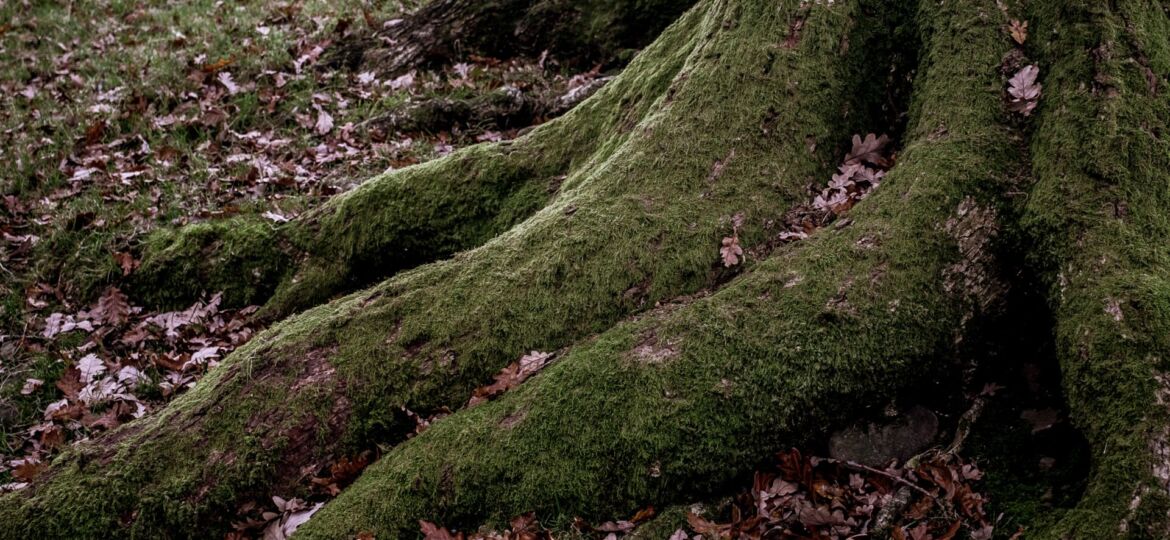
When we look at a tree, we see its trunk, leaves and branches: the things that are most visible. Yet its growth depends on what we cannot see: its roots. These need good-quality soil, nutrients, water, and a diverse, living ecosystem.
When thinking about the psychosocial role of temporary relocation programmes, it is easy to focus on what is obvious and visible. Our minds naturally turn to the need for specialised teams and psychological support, whether individual or group-based. We may recognise that all these are essential, but some questions arise: what happens outside these spaces? What about the everyday conditions that allow a person to feel safe, rest, or regain a sense of agency and autonomy?
Being physically in a protection programme, being safe, does not necessarily mean that a person has regained their sense of security. Many women human rights defenders continue to remain connected, supporting their organisations and communities from their place of relocation. In many cases, they work double shifts, sleep very little, and struggle with feelings of guilt because they perceive themselves as privileged. As a result, the time intended for protection may remain shaped by the demands, responsibilities and constant state of alert associated with their role.
The complexity of relocation and temporary accommodation programmes necessarily calls for a broader perspective. Providing specialised psychosocial support services is not enough if the schedules and organisation of everyday life within the programmes leave little room to rest, switch off, recover one’s own rhythms, or reconnect with oneself and others. Care also encompasses the ordinary, the routine and the everyday: the things that make life predictable. This becomes particularly important when human rights defenders come from unpredictable, uncertain and unexpected situations, as is often the case in contexts of trauma. For this reason, establishing routines around sleep, meals, breaks, physical activity, massage and personal time are not trivial matters, nor are they separate from psychosocial care.
Psychosocial Care Is a Shared Responsibility
This perspective invites us to understand psychosocial care not as an external, stand-alone service, but as a cross-cutting dimension of the relocation programme. It does not depend solely on specialised teams and psychologists, but also on how the overall experience is organised.
A trauma-informed approach must also be embedded across the work of all practitioners, partner organisations, donors, support personnel and programme participants, guiding the programme’s everyday practices, relationships and decisions. Putting on our trauma-informed lenses does not mean interpreting every need or behaviour as a consequence of trauma. Rather, it means responding with empathy and understanding of its possible effects, fostering safety, trust, autonomy and the ability to make choices, while avoiding practices that could cause further harm.
For example, consider a human rights defender who refuses a medical consultation or a recommended treatment. From a trauma-informed perspective, their decision is not automatically interpreted as a lack of awareness or cooperation. Instead, their previous experiences, cultural frames of reference and understanding of health are explored respectfully, with the aim of fostering dialogue that respects their agency and allows care alternatives to be developed together.
Nurturing the Roots
For those who have had to leave their territories and communities, roots represent much more than a place of origin. They encompass relationships, identity, culture, land, spirituality, and ways of understanding and caring for life. Each person experiences this connection differently, and providing support means recognising this without making assumptions. Protection must address not only physical safety, but also the things that enable people to remain connected to their own frames of reference and preserve a sense of continuity and belonging.
In Toward a Feminist Theory of Caring (1990), Berenice Fisher and Joan C. Tronto define care as “everything that we do to maintain, continue and repair our world so that we can live in it as well as possible”. This definition broadens our horizons, helping us see that care is not simply about supporting someone when they need help, but also about sustaining the material, physical, relational and social conditions that make life possible. Care encompasses both specialised, direct support and the conditions that allow everyday life to unfold with dignity. We must work towards relocation and protection systems that are good enough: systems capable of providing fertile ground in which everyday life can unfold at a gentler pace, supporting recovery, integration, safety and a sense of meaning.
From this perspective, care is also a political commitment. As Joan C. Tronto argues through her political ethics of care, the way we organise care is shaped by power relations. The challenge for temporary relocation programmes is not simply to adopt this perspective, but to uphold it in everyday decisions, particularly when a person’s needs do not easily fit within established schedules, available resources or existing programme arrangements.
Putting this reflection into practice means examining how our intentions translate into the actual conditions of relocation, how much room there is to adapt our responses, and how we address tensions that may arise between individual needs and the way the programme operates. It also means recognising that care is not the sole responsibility of specialised teams, but a commitment shared by everyone involved.
Let us return to the tree! It is not enough to protect its trunk or tend to its leaves when they show signs of deterioration. In permaculture and regenerative agriculture, the focus is on nurturing and improving the soil and the biodiversity that support the healthy growth of roots and everything that grows from them.
In our programmes, this means looking beyond the services we provide and paying attention to the conditions that enable each person to rest, maintain their relationships, regain autonomy and decide how to continue their journey. Because protection is not just about bringing someone to safety; it is also about nurturing the conditions that allow them to keep putting down roots.
For the past six years, Jose Herrero has worked alongside psychologist Marcela San Cristóbal in the Catalan Programme for the Protection of Human Rights Defenders, supporting defenders throughout their protection process.
Through COS, Jose contributes to a holistic approach to care that goes beyond individual therapy. This includes therapeutic group spaces for defenders and those who accompany them, coordination with mental health professionals, and access to a range of healthcare services. The aim is to support not only psychological recovery but also the social relationships, sense of belonging and everyday conditions that make well-being possible.
Jose is also part of PsicoProTejer, a network of professionals working to strengthen trauma-informed psychological and psychosocial support for human rights defenders across Spain. His work highlights a simple but essential principle: caring for defenders also means caring for the people, relationships and environments that sustain them